The Globe and Mail

France's Astronomical Treasures

From the Pyrenees to the Alps, France offers world-class stargazing destinations where ancient starlight meets modern cultural tourism

By Evann POPOFF
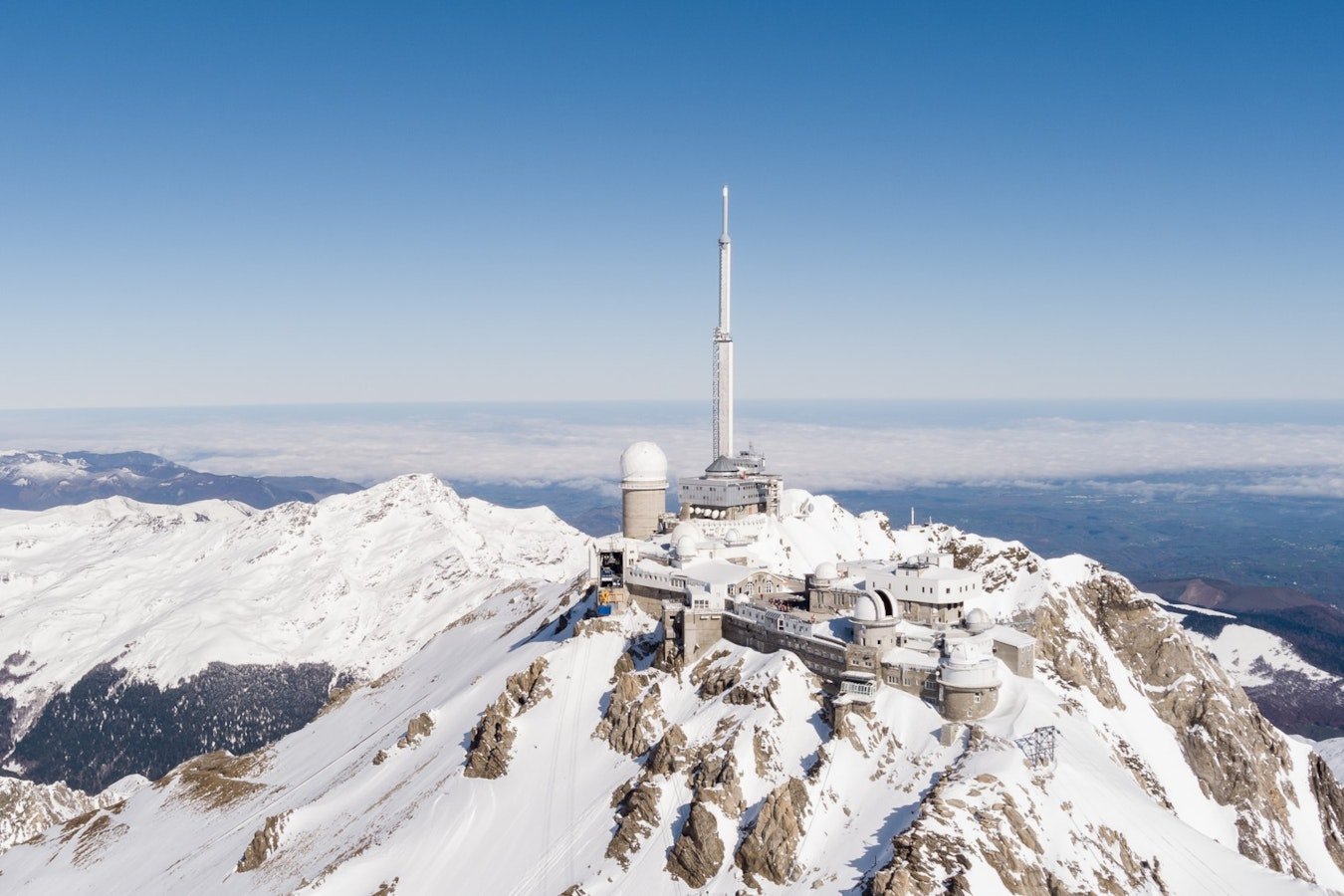
Panoramic view from Pic du Midi Observatory

The Pic du Midi Observatory offers one of Europe's most spectacular stargazing experiences, perched 2,877 meters above the French Pyrenees.

Stargazing is like traveling without leaving home. But today, some countries are turning this experience into a form of cultural tourism.

When we talk about France, we often think of its well-known treasures: its gastronomy, its literature, its architecture, its diverse and varied landscapes, and its expertise in the field of perfumery and luxury goods.

However, we think much less about the country's rich scientific and astronomical heritage. From historic observatories such as the Pic du Midi to festivals dedicated to astronomy and certified “Dark Sky” parks, the country is full of experiences for stargazers and science enthusiasts to discover.

Although Canada has spectacular landscapes that are ideal for stargazing, France offers a unique combination of astronomy and the cultural experience of French joie de vivre. Whether you're an amateur astronomer or simply curious about the cosmos, France has something to offer everyone.

Explore France's Astronomical Sites

Interact with the map to discover observatories and dark-sky reserves across France.

Filter Sites

Map Layers

Observatory Types

RICE Reserves
Observatories
Events

A Booming Market: Astrotourism as France's New Cultural Export

France has transformed astronomy from an elite scientific pursuit into a popular cultural experience that attracts 572,987 annual visitors across major sites and 235,000 participants in organized stargazing events. This represents a remarkable democratization of scientific wonder.

The Pic du Midi observatory in the Hautes-Pyrénées is a case in point. In 2024, the site received a record 144,169 visitors, with revenue of more than 10.1 million euros – a first for the facility to break the 10-million-euro barrier. In its 25 years of being open to the public, the observatory has drawn an impressive 2.75 million visitors, evidencing the long-term popularity of astronomical tourism.

This growth reflects a broader global trend. The space tourism market, while in its nascent stage, is projected to grow from $881.56 million in 2023 to potentially $35.1 billion in 2032, with North America currently holding 38.3 percent of the market share. Traditional space tourism is elitist, but land-based astrotourism offers an affordable alternative that France is ideally situated to capitalize on.

"The Pic du Midi is today more than an observatory – it's a cultural destination that weds scientific discovery and the French lifestyle," the management of the facility describes. The popularity of the site has encouraged plans for expansion and additional investment in the visitor experiences.

France's Astronomical Crown Jewels: Where Science Meets Culture

The French astrotourism strategy is different in having a considered set of locations that balance scientific caliber with cultural experience. France boasts 12 big public observatories and over 30 planetariums, which indicates there is infrastructure both for research and education.

The Haute-Provence Observatory, established in 1937 as a CNRS research facility, is a classic case in point. Meanwhile conducting continual innovative astronomical research, it welcomes 11,000 visitors annually through professionally designed public activities. These are no tours—they're hands-on experiences in which visitors may use professional telescopes and work alongside active scientists.

At Saint-Véran, France's highest observatory at 2,930 meters above sea level, the convergence of tourism and research is almost spiritual. Despite its remote alpine location, the observatory is expecting 2,200 visitors in 2025, drawn by the promise of gazing at celestial bodies with unparalleled definition. The success of the observatory shows how even specialized research institutions can engage the public effectively without abandoning their purpose.

The cultural dimension extends beyond individual locations. Seven International Dark-Sky Reserves (RICE) exist in France, covering 14,050 square kilometers of protected night sky. They're not mere reserve territories — they're active tourism territories where astronomy is available for tourists in the broader cultural context of France. The Parc national des Cévennes, the largest RICE in Europe, covering an area of 4,200 square kilometers, provides stargazing as well as hiking, local food, and trips to cultural heritage sites.

Most significantly, 722 French communes have obtained the "Villes et Villages Étoilés" status, creating a network of stargazing locations throughout France. The bottom-up approach saves high-quality night sky experience as accessible throughout France's diverse regions, it takes care of democratic principles underpinning French cultural policy.
The Festival of Stars

The annual Nuits des Étoiles represents Europe's largest public astronomy outreach program, attracting 187,000 participants across 568 local events coordinated by 3,000 volunteers. This massive community mobilization transforms astronomy from a specialized hobby into a shared cultural celebration.

The French Association of Astronomy (AFA), with 1,200 members and 200 affiliated clubs, reaches 250,000 people annually through various programs. These numbers reflect a thriving amateur astronomy community that serves as ambassadors for continued public engagement.

Beyond the flagship festival, specialized events like Perséides Watch Events mobilize 30,000 observers across 200 local gatherings, demonstrating the depth of public interest in astronomical phenomena.

Confronting Light Pollution for population

France's challenging 11 million public light sources present astronomical observation with huge barriers. Yet France has drawn this challenge into potential by developing new solutions benefiting both astronomy and society.

The National Association for the Protection of the Sky and Nocturnal Environment (ANPCEN) conservatively estimates that optimal lighting management would save 2 billion euros annually and improve sky quality dramatically. This economic argument has been convincing to municipalities in seeking sustainable development patterns.

Expansion of International Dark-Sky Reserves reflects a strong intent by France to reconcile development with conservation. Each RICE is both a protected reserve and a demonstration site for environmentally conscious development, demonstrating to communities how they can be economically thriving and still natural darkness will reign.

Innovation in Accessibility: Technology Meets Tradition

France's astrotourism industry increasingly relies on technological innovation to overcome barriers of geography, weather, and physical accessibility. Modern observatories integrate virtual reality experiences, remote-controlled telescopes, and smartphone applications to ensure meaningful experiences for all visitors regardless of conditions or abilities.

The Cité de l'Espace in Toulouse has pioneered many of these approaches, combining traditional planetarium shows with interactive exhibits and real-time satellite connections. While visitor numbers aren't publicly disclosed, the facility's influence extends throughout European space tourism, establishing models copied across the continent.

Mobile astronomy programs bring equipment and expertise directly to communities lacking permanent facilities. The Ferme des Étoiles in the Gers region has developed portable observatory systems that can be deployed at schools, community centers, and tourist accommodations throughout southwestern France. These programs ensure that astronomical experiences remain accessible even in areas without major permanent installations.

Digital platforms increasingly complement physical experiences. French astronomy organizations have developed sophisticated applications that provide real-time sky maps, notification systems for optimal viewing conditions, and virtual tours of major observatories. These tools help visitors maximize their experiences while building ongoing engagement with astronomical content.

The integration of technology with traditional French hospitality creates unique experiences unavailable elsewhere. Many observatories now offer combined packages including stargazing, regional cuisine, and accommodation in local villages. This approach acknowledges that astronomical tourism often appeals to visitors seeking broader cultural experiences rather than purely scientific education.

Cultural & Educational Impact: Inspiring Scientific Curiosity

France's astronomical facilities serve important educational functions with the potential to extend beyond their local influence on society. Big facilities discover that school groups comprise 30-40% of annual visits with the programs serving students from elementary up to university levels.

Planetariums serve especially important educational roles in urban areas where free natural sky observing is limited. The 100,000 first-year attendance at the Planétarium de Strasbourg indicates enormous public interest in astronomy education when presented in convenient, engaging formats.

Outreach to the community persists through amateur astronomy clubs linked with large facilities. The AFA network of 200 clubs provides ongoing programming that maintains public interest between significant events while establishing local expertise that enhances visitor experiences at professional observatories.

Looking beyond the Stars

France's astrotourism model shows that science tourism can be utilized for both economic development and educational purposes if properly planned and nurtured with community support. France, by integrating astronomy into the country's cultural strength—hospitality, heritage conservation, and community participation—has developed successful models in sharing scientific wonder.

Its pairing with general cultural tourism imparts a resilience not present for specialist-only attractions. Local cuisine, cultural sights, and educational activities are all accessible to tourists even on cloudy days, whilst astronomical activities offer unique features for standard tourist itineraries.

As international interest in space continues to grow, France's emphasis on culturally-rich, accessible astronomical experiences positions the country to be at the good element of science tourism.

For visitors seeking experiences that unite nature, science, and human connection, France's astrotourism landscape has something unique to provide: the ability to observe the universe through a lens of French ingenuity, community spirit, and unwavering commitment to making the stars accessible to all